
Why Asking the Right Questions Matters
Specifying a stainless steel drain system involves more than choosing a product from a catalog. Understanding how your facility operates, how liquids move through the space, and how it will be cleaned helps guide better specification decisions.
Considering drainage as part of the overall facility design helps simplify installation, maintenance, and long-term operation.
The following five questions can help identify your application’s requirements before selecting a solution:
- What will this area be exposed to?
- How will water move through the space?
- Who will be cleaning and maintaining the drain?
- How will the drain integrate with the rest of the facility?
- What are your long-term operational goals?
1. What Will This Area Be Exposed To?
The operating environment plays a significant role in determining how the drain should perform.
Some areas experience frequent washdowns with large amounts of water, while others may only require occasional cleaning. Exposure to cleaning chemicals, food byproducts, industrial contaminants, moisture, and temperature fluctuations can all influence long-term performance.
Evaluating these conditions helps define what the system needs to withstand and narrow the range of appropriate solutions before product selection begins.
2. How Will Water Move Through the Space?
Before specifying a drainage system, take time to evaluate how liquids move throughout the area.
Questions to Consider:
✔ Where does water originate during production or cleaning?
✔ How much liquid needs to be collected?
✔ Does equipment discharge into this area?
✔ Are there low spots where water may collect?
✔ How will the floor slope direct water toward the drainage system?
✔ Could future equipment or layout changes affect runoff patterns?
Understanding liquid flow helps determine drain locations, collection points, and how the system integrates with the facility layout.
3. Who Will Be Cleaning and Maintaining the Drain?
A drainage solution should support the people responsible for maintaining it.
Routine cleaning, inspections, and preventative maintenance should be considered during specification. Selecting a system with accessible components can simplify these tasks and support existing sanitation procedures.
The best solutions fit your maintenance process rather than requiring your team to adapt around them.
4. How Will the Drain Integrate With the Rest of the Facility?
Drainage should be planned as part of the overall facility layout. Coordinating key design considerations helps reduce challenges and streamline the project through installation and startup.
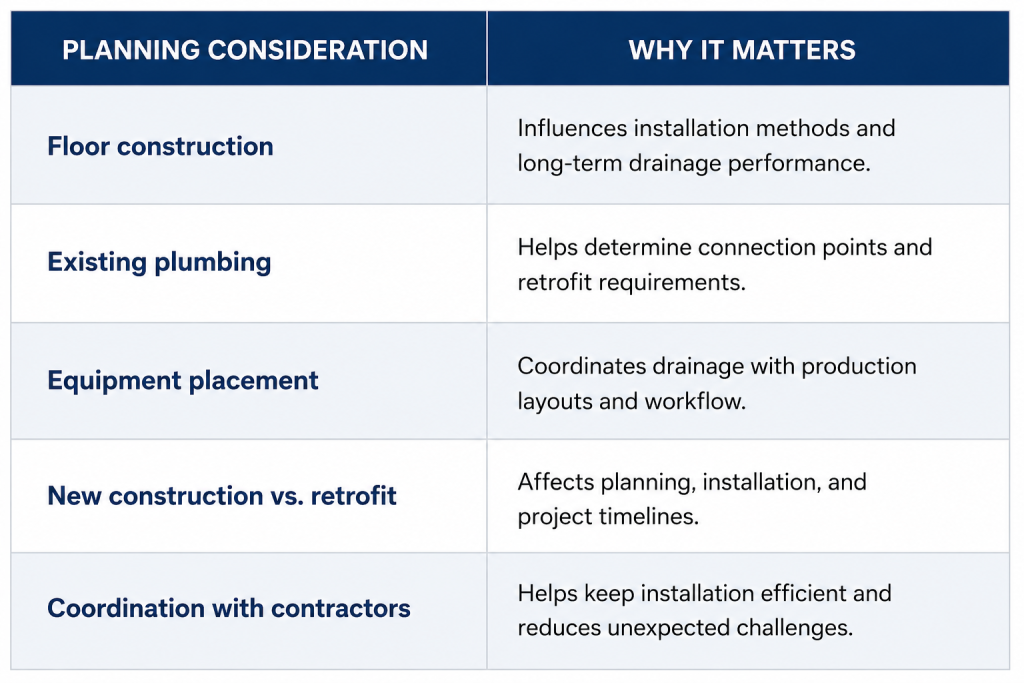
Early coordination helps support efficient project execution and long-term performance.
5. What Are Your Long-Term Operational Goals?
Facilities rarely remain unchanged. Production demands increase, equipment is relocated, and layouts evolve as operations grow.
Considering future expansion, production changes, maintenance priorities, and expected service life helps ensure today’s specification continues to support tomorrow’s operation. Planning ahead can also reduce future modifications and provide greater flexibility as requirements evolve.
Better Drainage Starts with Better Planning
There isn’t a single “right” drainage system for every facility. The best solution reflects how your operation functions today while supporting future growth.
Before finalizing your specification:
✓ Evaluate operating conditions
✓ Understand liquid flow patterns
✓ Review cleaning and maintenance procedures
✓ Coordinate drainage with the facility layout
✓ Consider future operational changes
By asking the right questions, you can make more informed specification decisions that support long-term performance and maintenance.
AWI works with engineers, contractors, and facility owners to specify stainless steel drain solutions that align with each application’s operating requirements. Explore our full line of stainless steel drain solutions below.
Previous
Next


